Your outfit is part of your progression
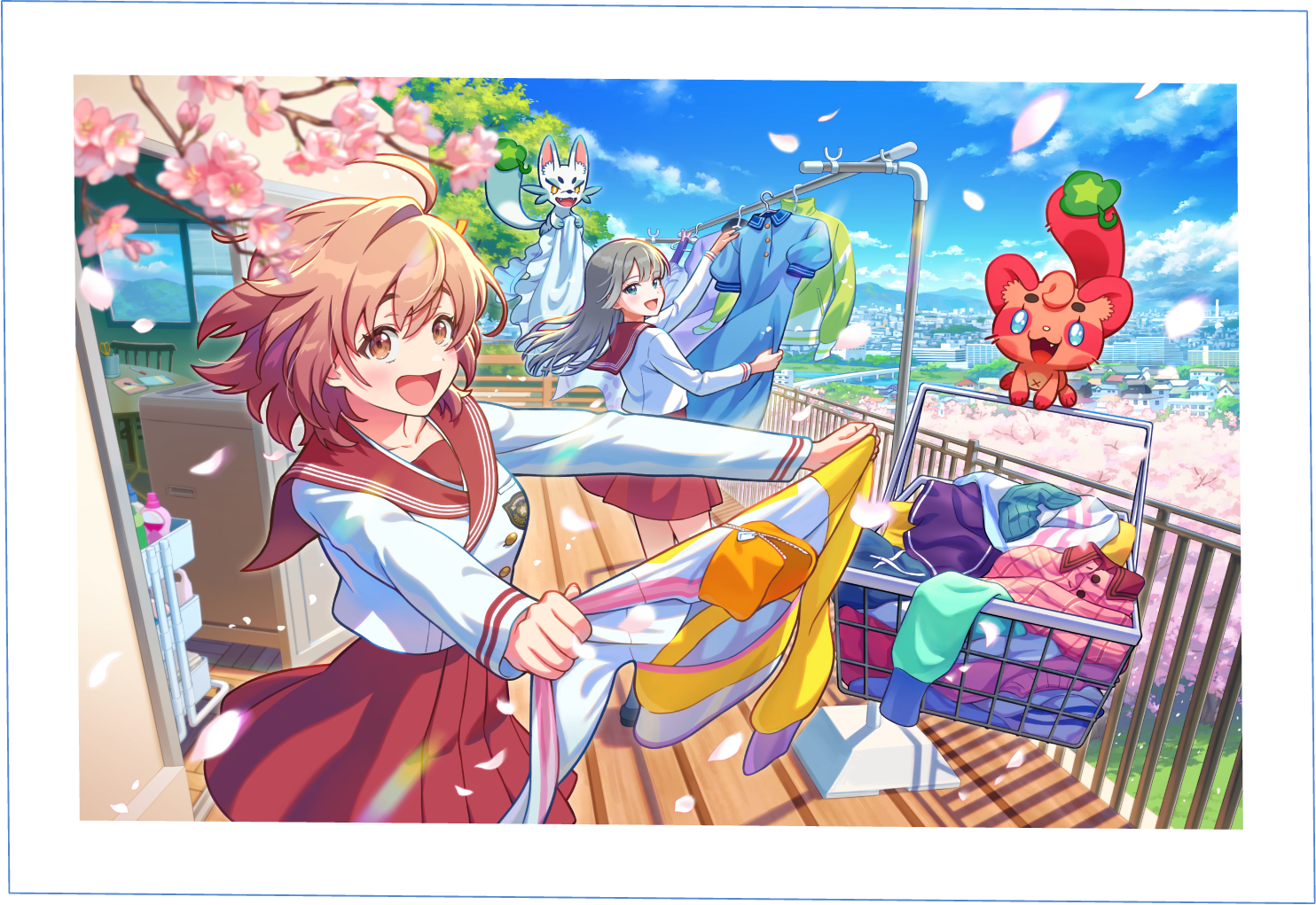
Magical outfits called Haregi give the girls their transformed appearances and powers. The developers compare changing these outfits to changing jobs: outfits represent different roles, and an outfit grows stronger through use.
Repeated patrols also make clothes dirty. The September presentation links that dirt to an HP-like condition: when an outfit is too depleted, washing is needed before it can return to service.
The patrol-to-laundry loop
- Choose an available outfit. Consider the weather at the patrol destination and the clothes you can currently use.
- Patrol and battle. Clear rubbish enemies from towns; clothing becomes dirty in the process.
- Wash the worn outfit. An outfit being washed is unavailable to wear.
- Change into another outfit. Rotation lets the characters continue patrolling while clothing recovers.
- Dry and return it to use. The weather influences this recovery stage.
Why the weather matters after battle
Sunny conditions speed up the recovery described in the reveal. Rain introduces a social interaction: players can help bring in one another’s laundry. The game makes checking the weather relevant both to magic and to caring for outfits.
Exact drying timers, detergent requirements, outfit acquisition rates and the final laundry interface have not been announced in the material currently presented. There is no reliable numerical laundry calculator yet.
Plan rotation, not a permanent best outfit
An outfit’s availability matters alongside its strength. Keeping a second outfit in mind is a sensible consequence of the washing system, but the best rotation will depend on the released outfit roster and timing rules.
See weather and combat for destination planning. The 31:57 and 33:41 broadcast chapters introduce outfits and explain the cleaning loop.